Want to Invest in Property?
Let us help you make the right decisions for the best results.

Let us help you make the right decisions for the best results.
By Jarrod McCabe and Jordan Telfer
Renters and investors look at property through very different lenses. What makes a home comfortable to live in is not always what makes it a strong investment. The priorities diverge – sometimes subtly, sometimes dramatically.
To illustrate this, we’ve taken two real properties in North Fitzroy, both sold within the last 12 months, and assessed each from both a renter’s point of view and an investor’s. The result is a useful exercise in understanding why asset selection for investment purposes requires a fundamentally different mindset from choosing somewhere to live.
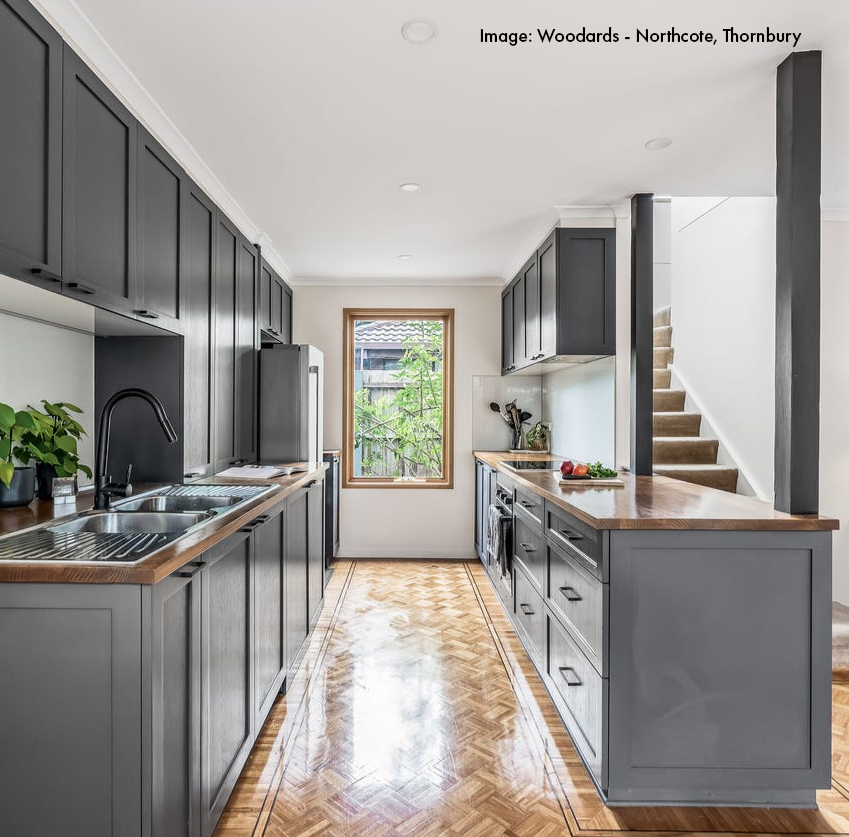
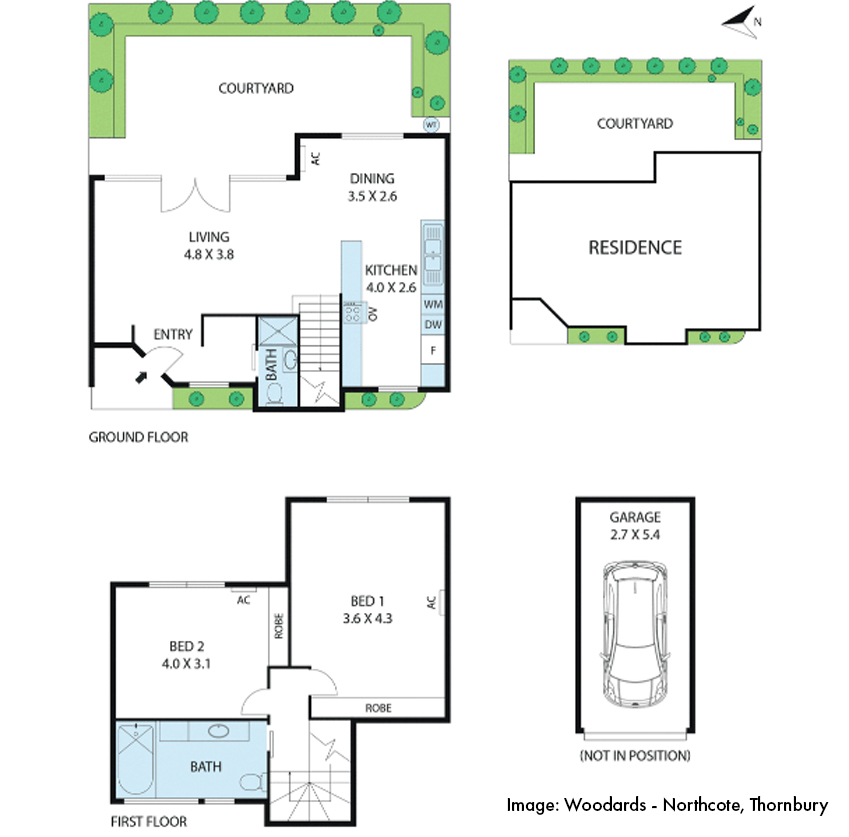
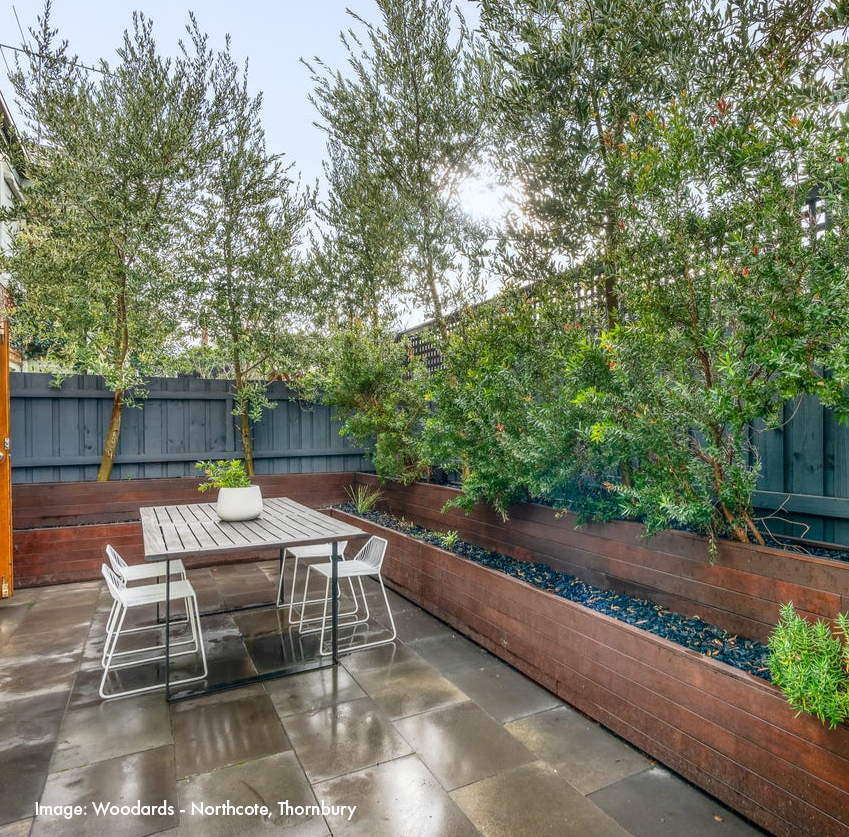
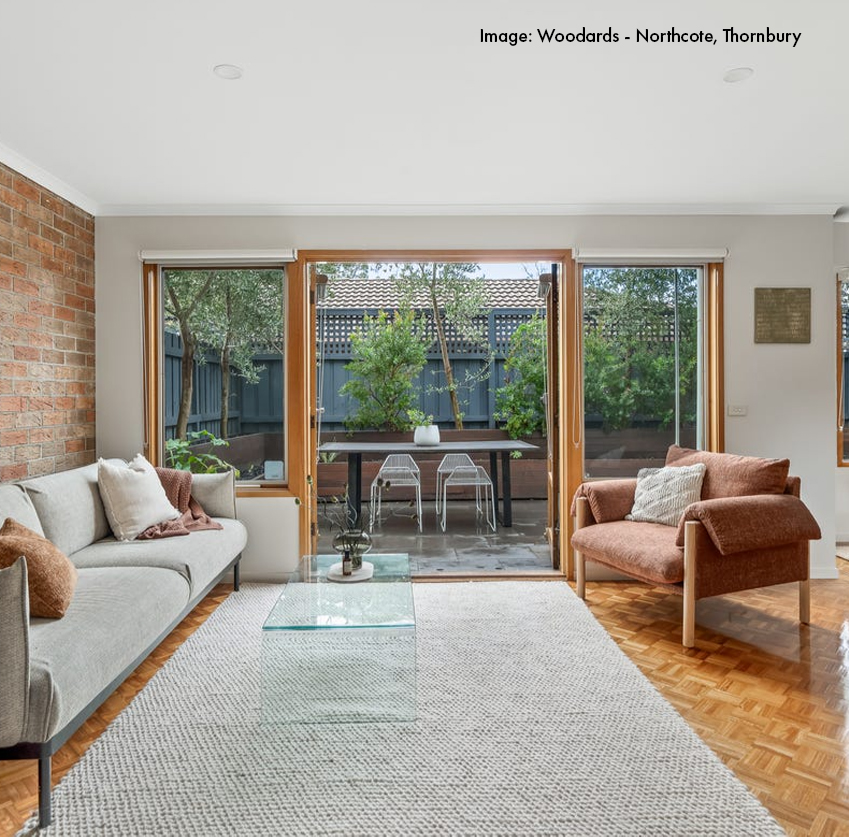
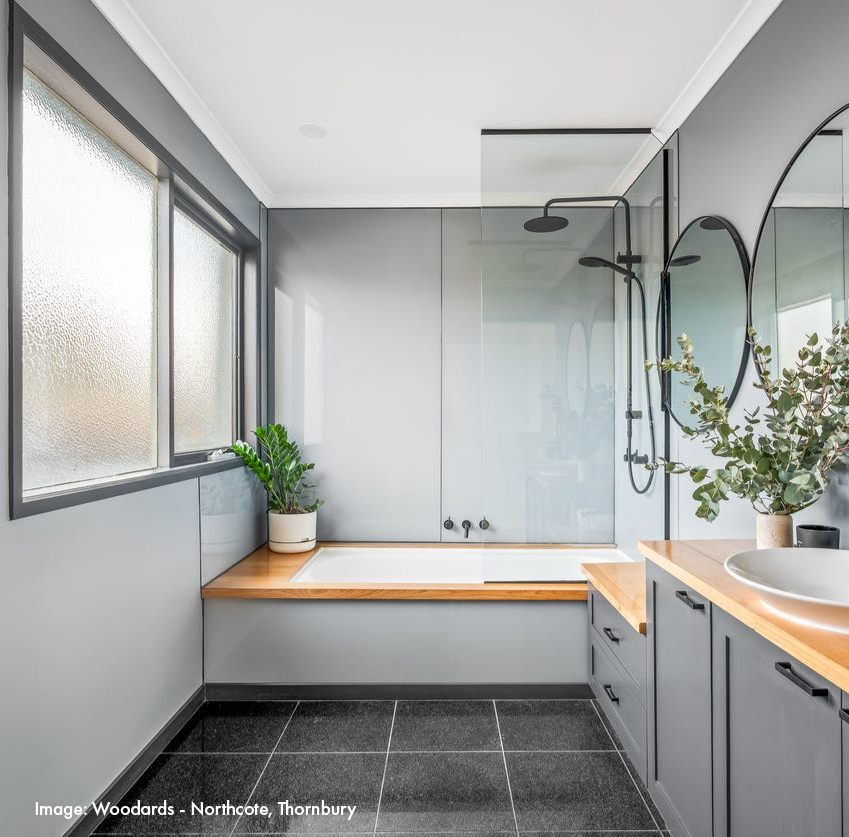
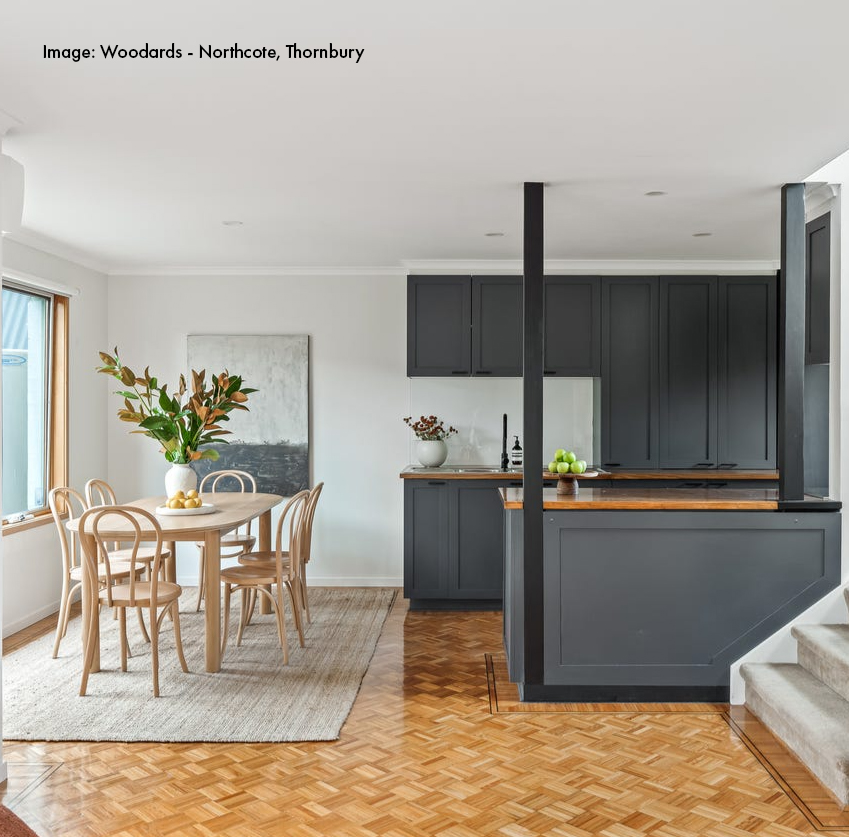
The first is a townhouse on Miller Street, North Fitzroy.
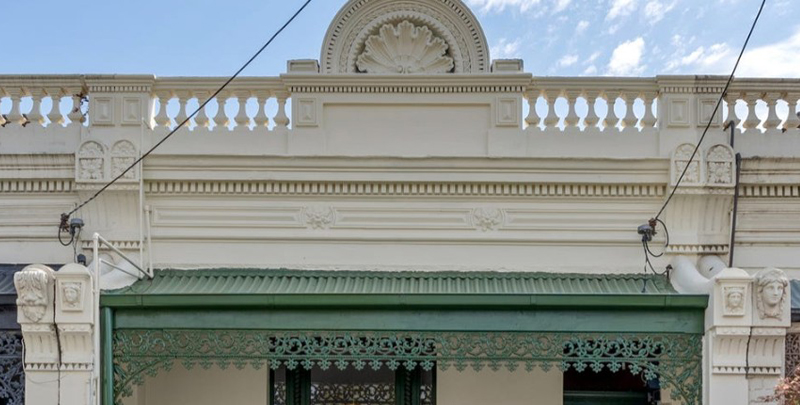
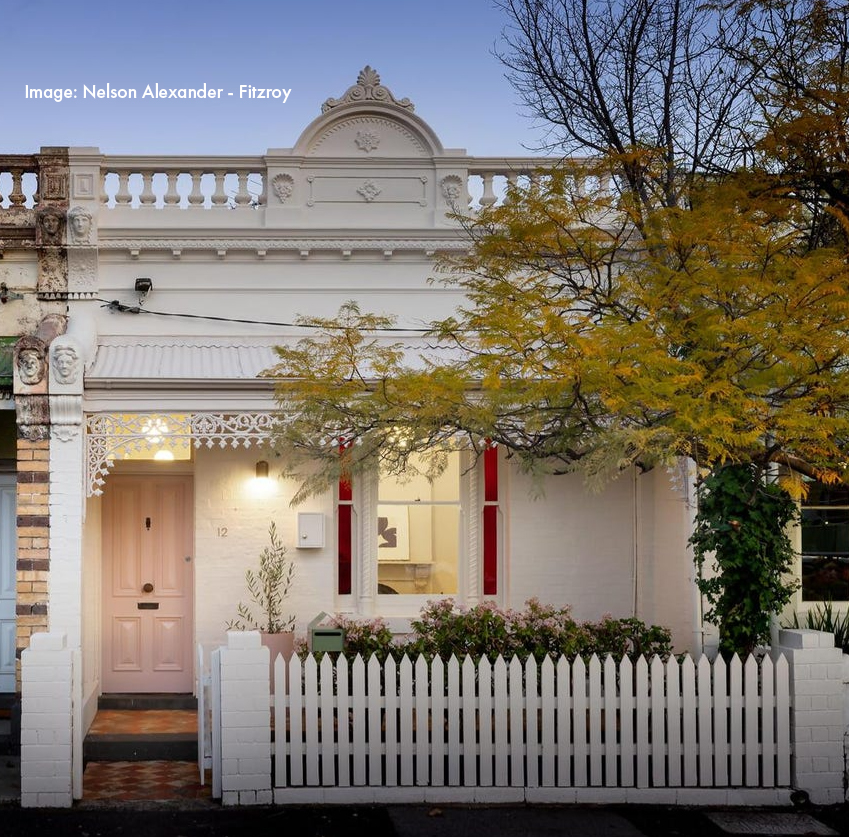
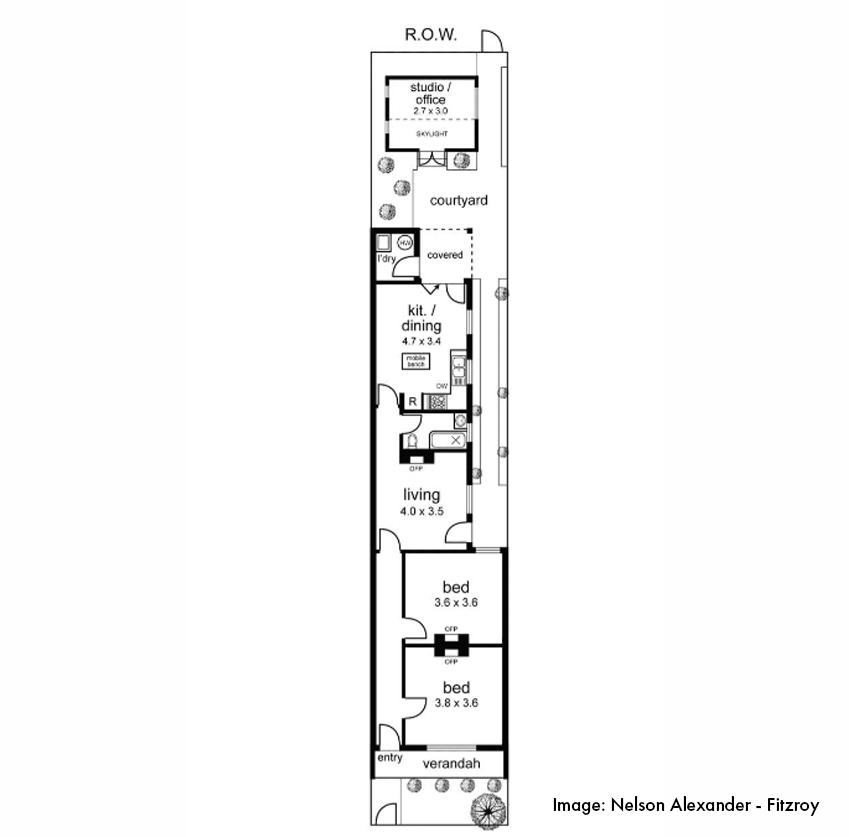
The second is a single-storey Victorian terrace on McKean Street, North Fitzroy.
Images: Woodards – Northcote and Thornbury
From a renter’s perspective, the townhouse is immediately appealing. The condition is excellent – the recently renovated kitchen and bathroom are modern and attractive. The floor plan offers good balance, with upstairs-downstairs segregation providing separation between living and sleeping areas.
The courtyard is low-maintenance. There’s a garage on site, which matters on Miller Street – it carries a fair bit of traffic as a cut-through and sits opposite a primary school, so being able to bring a car in rather than park on the street is a genuine advantage.
Being at the back of the block also helps. The school generates noise and congestion at pick-up and drop-off times, and a bus runs along the street. From the rear of the development, that’s largely absorbed. Split systems in the bedrooms as well as the living areas add comfort – particularly upstairs, which is west-facing and could get warm in summer.
Access to services is good. Merri Creek parklands are just across St Georges Road, trams run nearby, and the Scotchmer Street shopping strip is within a reasonable walk. It’s a comfortable, convenient place to live.
The investor’s assessment is less enthusiastic. The high rent relative to purchase price delivers a solid yield, and a happy renter is always a positive. But several factors give pause.
Miller Street’s traffic and the school opposite could limit buyer competition when it comes time to sell. Home buyers – who typically drive the strongest prices – may be put off by those characteristics. For $1.3 million, there’s also the question of whether you want to be paying owners’ corporation fees and sharing common property when you could potentially own a standalone house for similar money.
The bigger issue is upside. The property is at its best right now. The kitchen and bathroom are done. The courtyard is finished. Being in an OC means extensions aren’t an option. There’s very little an investor can do to add value over time. And from a supply perspective, pockets of North Fitzroy have had commercial and industrial land progressively converted to residential. More townhouses can – and likely will – be built nearby. That limits the scarcity value that drives long-term capital growth.
Images: Woodards – Northcote and Thornbury
Images: Nelson Alexander – Fitzroy
The renter prefers the location. McKean Street is at the southern end of North Fitzroy, closer to the CBD, and arguably one of the best streets in the suburb. Edinburgh Gardens – one of the finest parks in Melbourne’s inner north – is a couple of doors away. Multiple tram lines are within walking distance along St Georges Road, Nicholson Street, Queens Parade and Brunswick Street. Rushall station is walkable, if a little further than ideal.
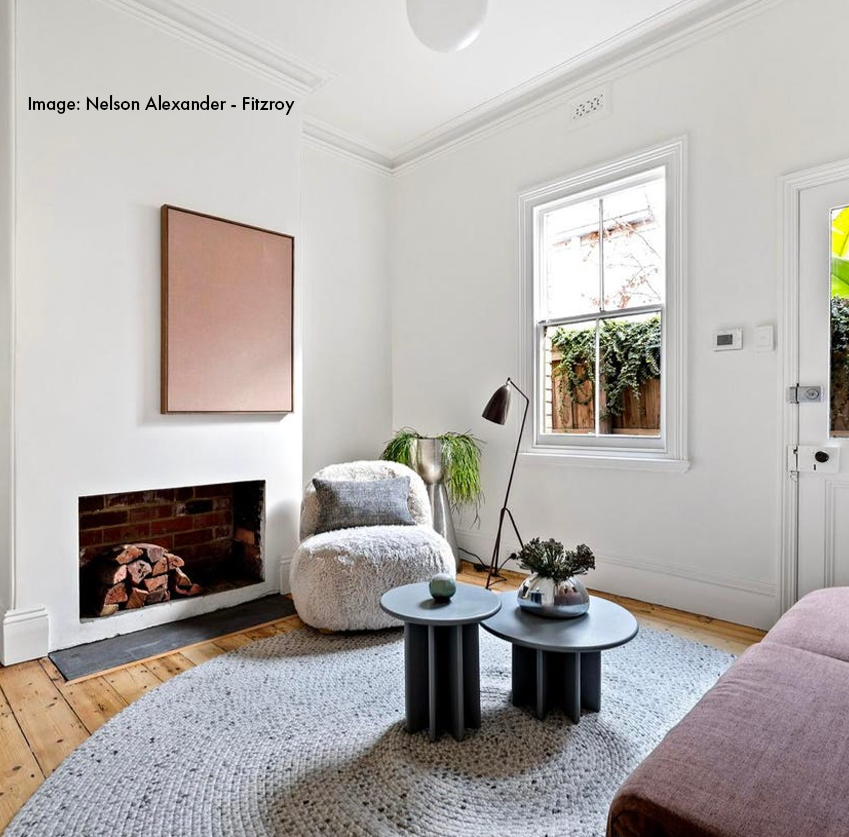
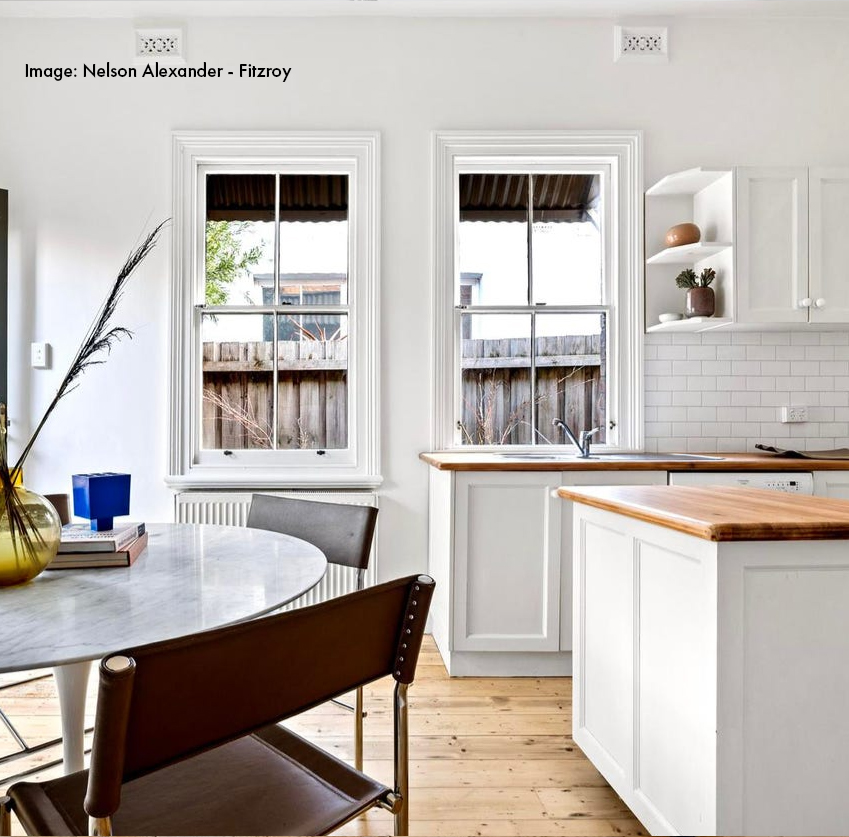
But the condition isn’t as strong as the townhouse. The renovation is 25 years old. The layout is two separate living areas rather than open plan. And there’s no off-street parking – though McKean Street is wide, with parking on both sides and up the middle, so finding a spot is rarely an issue.
As a renter, the honest assessment is that you’d probably stretch for the townhouse. The day-to-day standard of living is simply easier. You walk in and everything is done.
This is where the perspectives diverge most sharply. For the investor, the terrace is the stronger asset – and it’s not particularly close.
Start with the things you can’t change. The location is arguably second only to Alfred Crescent in North Fitzroy. The street, the proximity to Edinburgh Gardens, the access to multiple transport options – these are permanent advantages. The floor plan works. The property is comfortable and livable in its current state, so a renter can move in immediately.
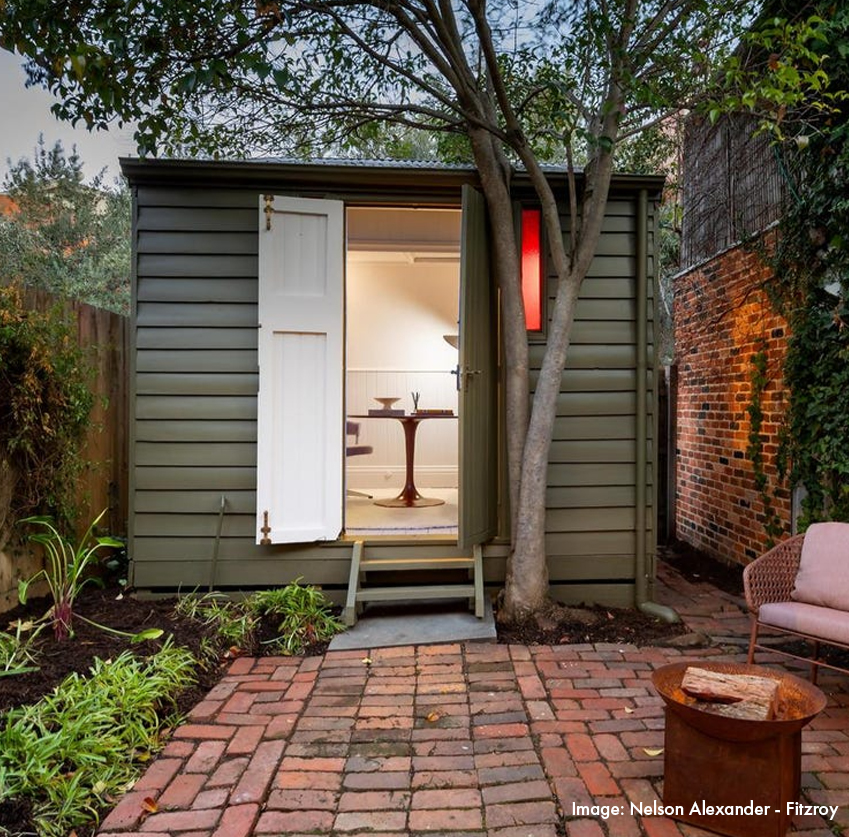
But unlike the townhouse, the terrace has significant value-add potential. The kitchen and bathroom can be renovated in three, five or ten years’ time – lifting both the rental return and the capital value simultaneously. There’s no owners’ corporation, so the owner has complete control. An extension upward is feasible. The layout could be reconfigured to create open-plan living. Off-street parking could be added via the rear laneway by converting part of the studio space. Each of these improvements is available when the time and budget are right.
The scarcity value is also materially different. Victorian terraces in premium North Fitzroy streets are a finite resource. No one is building more of them. Townhouses, by contrast, can and do get built as surrounding land is redeveloped.
The investor is prepared to accept a lower rent in the short term – around $800 versus $900 – knowing that a well-executed renovation would push the terrace to $950 or beyond, while also delivering capital growth that the townhouse is unlikely to match.
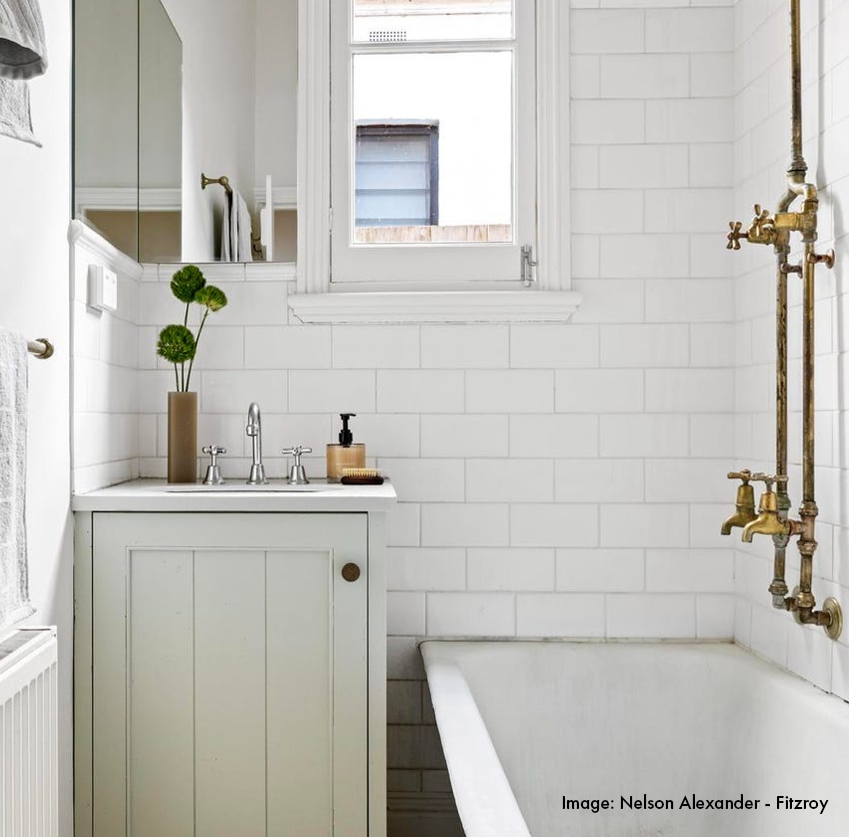
Images: Nelson Alexander – Fitzroy
The renter picks the townhouse. The investor picks the terrace. Both are making rational decisions – they’re just optimising for different things.
The renter wants comfort, convenience and a high standard of living right now. The townhouse delivers that immediately. The investor wants long-term capital growth, scarcity value, a broad demand base and the ability to add value over time. The terrace delivers all of those.
This is the distinction that matters most in property investment. A property that feels appealing to live in is not necessarily one that will perform as an investment. The best current yield is not always attached to the best long-term asset. And the ability to improve a property over time – rather than buying one that’s already at its peak – is one of the most reliable ways to build wealth.
If you’re choosing where to live, prioritise comfort, condition and convenience. If you’re choosing where to invest, prioritise the fundamentals you can’t change – location, scarcity, breadth of demand – and look for the capacity to add value over time.
These two priorities will often point you toward different properties. Understanding that distinction is the starting point for making sound investment decisions.
Listen to Jarrod’s podcast: